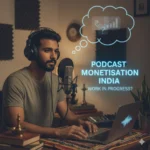





Remember when podcasts were purely an audio affair? You’d plug in your headphones, close your eyes, and let the voices transport you. While that purist vision still holds for many, a significant shift is underway in the podcasting world: the rise of the “video-first” podcast. Suddenly, watching your favorite podcasters chat, react, and engage is becoming as common, if not more common, than just listening.
This isn’t just a fleeting trend; it’s a powerful signal about how modern audiences, especially in a dynamic market like India, prefer to consume content. It suggests that for a growing segment of the population, audio alone is simply no longer enough to capture and retain their full attention.
The YouTube Effect and Visual Engagement
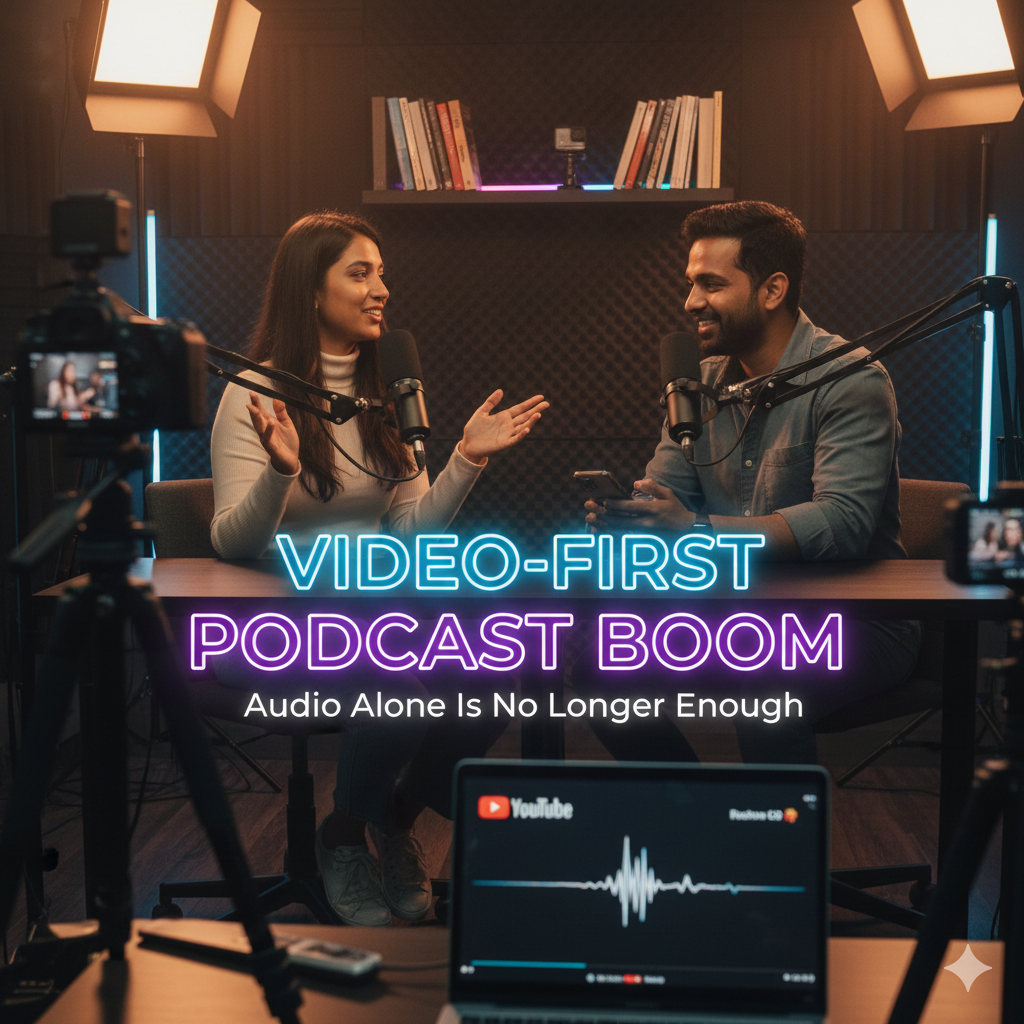
A huge driver of this video-first phenomenon is, undoubtedly, YouTube. What started as a platform for uploading existing audio podcasts with a static image has evolved into a full-fledged hub for video podcasts. Creators are now intentionally filming their podcast sessions, often with multiple cameras, good lighting, and engaging visuals, specifically for YouTube and other video platforms.
Also Read: What to do when you have a Start up idea
Why? Because human beings are inherently visual creatures. Seeing the speaker’s expressions, body language, and reactions adds a whole new layer of engagement that pure audio can’t replicate. A witty comment lands better when you can see the smirk; a serious point gains gravitas when you observe the thoughtful gaze. This visual connection fosters a deeper sense of intimacy and presence, making the audience feel more like they’re part of the conversation rather than just eavesdropping.
The Power of Multi-Tasking (and Multi-Sensory) Consumption
One might argue that the beauty of audio podcasts is their ability to accompany you during other tasks – commuting, exercising, or doing chores. And that remains true. However, the video-first approach doesn’t necessarily eliminate this; it offers an option.
For many, especially younger audiences, consuming content is a multi-sensory experience. They might have a video podcast playing in the background while they work, occasionally glancing at the screen, or they might dedicate their full attention to it during a meal. The video element transforms the passive act of listening into a more active, engaging experience. It caters to our increasingly visually-stimulated world, where attention spans are often shorter, and dynamic content is king.
Reaching New Audiences and Discoverability
Video platforms, particularly YouTube, offer unparalleled discoverability. With billions of users and sophisticated recommendation algorithms, YouTube can expose podcasts to new audiences who might not typically browse traditional audio podcast directories. A compelling thumbnail or a captivating short clip can pique interest in a way that an audio-only description might not.
For creators, video also opens up new avenues for content repurposing. Short, engaging clips from longer video podcasts can be easily shared across social media platforms like Instagram Reels, TikTok, or YouTube Shorts, acting as powerful marketing tools to drive traffic back to the full episode. This kind of cross-platform promotion is far more effective with a visual component.
The Creator’s Advantage: Brand Building and Monetization
For podcasters themselves, going video-first offers significant advantages. It allows them to build a stronger personal brand by showcasing their personality, style, and presence. This visual identity can foster a deeper connection with the audience, turning listeners into loyal fans.
From a monetization perspective, video opens up new revenue streams. YouTube’s robust advertising system allows creators to earn income directly from video views. Furthermore, visually appealing content is often more attractive to sponsors who want their brand associated with high-quality, engaging productions. Product placements or visual endorsements become possible, expanding beyond traditional audio ad reads.
The Evolution, Not the End, of Audio
It’s important to clarify that the video-first podcast boom doesn’t signal the death of audio-only podcasts. There will always be a place for the purely auditory experience, especially for those who genuinely prefer to listen while engaged in other activities or for content that truly shines in an audio-only format (e.g., highly narrative storytelling or immersive soundscapes).
Instead, it signals an evolution. It’s about offering choice and meeting audiences where they are. It’s about recognizing that modern consumers, especially in tech-savvy markets like India, crave rich, engaging, and multi-faceted content experiences. Creators who embrace the video-first approach are not just making their podcasts viewable; they’re fundamentally changing how they tell stories, connect with their audience, and build their brand in an increasingly visual world. The message is clear: to truly thrive, many podcasts will need to consider not just what they say, but also how they appear.