




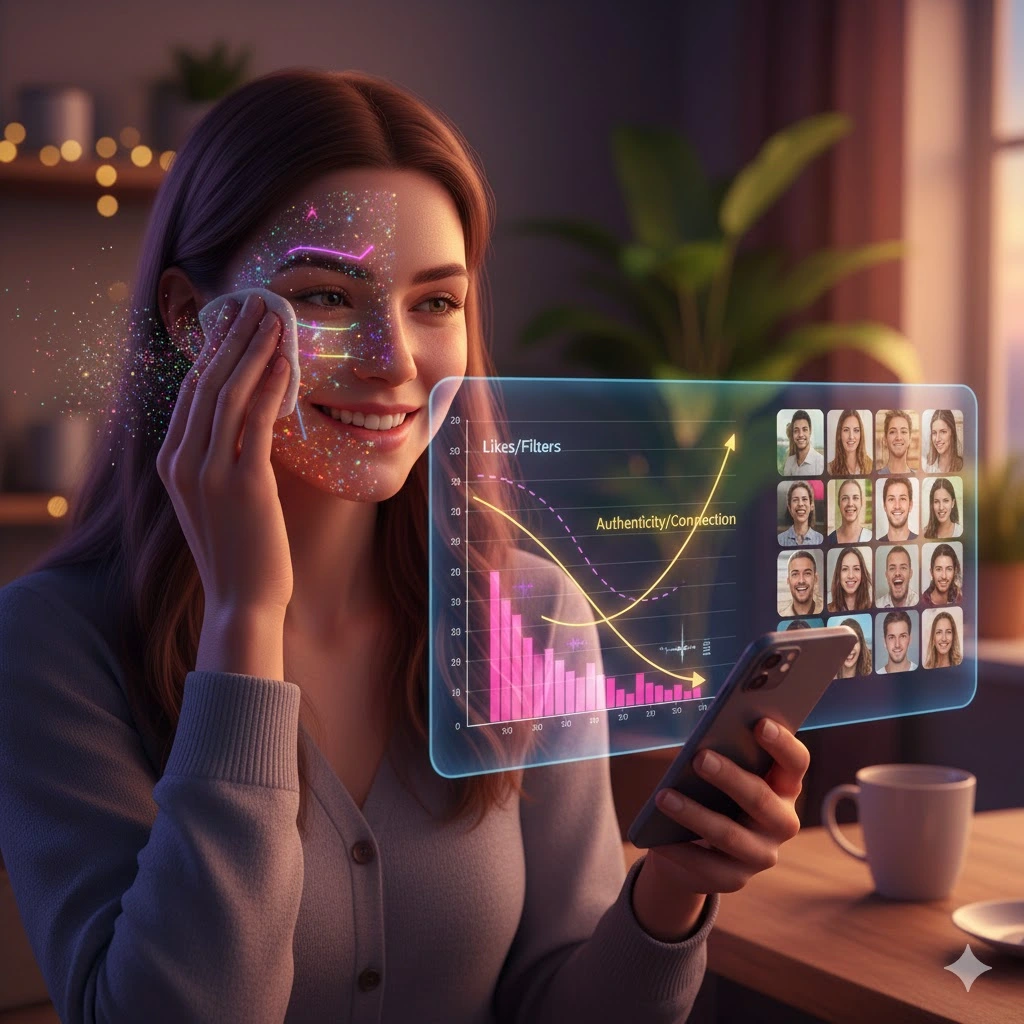
For nearly a decade, the internet felt like a place of magic and perfection. We lived in an era where every photo was polished and every face was smooth and every life looked like a movie set. Beauty filters became so common that we almost forgot what real skin looked like. However, something major is happening right now. We are witnessing a massive authenticity pivot online where people are finally pushing back against the fake. Users are exhausted by the pressure to look perfect and they are starting to hit the unfollow button on anything that feels manufactured.
Why We Are Tired of Perfection
The primary reason for this change is simple human fatigue. When everyone looks the same because of the same popular filters, the internet becomes a very boring place. More importantly, it becomes a place that makes us feel bad about ourselves. This is why real faces over filters have become such a powerful statement. Seeing a real person with pores and wrinkles and natural expressions feels like a relief. This digital wellness shift is helping people reclaim their self esteem by showing that beauty does not have to be perfect to be valuable.
The Death of the Polished Influencer
In the past, influencers were expected to be untouchable and flawless. Today, that exact quality is what makes them lose followers. People are looking for a genuine human connection that can only happen when someone is being real. The authenticity pivot online has forced many creators to change their entire strategy. Instead of hiding their mess or their bad days, they are sharing them openly. This raw content movement is proving that being vulnerable is actually a strength. It builds a bridge between the creator and the viewer that a filter could never create.
Also Read: Remembering Anunay Sood, the travel influencer who inspired a generation
Trust Is the New Currency
In a world where artificial intelligence can create perfect images in seconds, reality is becoming a luxury. We are seeing a crisis of trust in influencers who rely too much on editing. If a follower cannot trust that your face is real, they probably will not trust your advice or your product recommendations. This is why brand authenticity 2025 is focused on showing the “behind the scenes” moments and the real people behind the company. By showing real faces over filters, brands are proving they have nothing to hide and that they value their customers enough to be honest.
Celebrating Natural Skin Textures
One of the most beautiful parts of this trend is the celebration of natural skin textures. For a long time, things like acne or scars or freckles were seen as mistakes to be hidden by technology. Now, they are seen as marks of a life lived. The unfiltered social media trends we see today are encouraging young people to love their appearance exactly as it is. When a popular creator shows their real faces over filters, it sends a message that you are enough. This shift is a core part of the authentic creator culture that is defining the current decade.
The Future of Our Digital Lives
We are moving toward an internet that looks more like our actual living rooms and less like a fashion magazine. The death of perfection is a good thing for everyone. It allows us to spend less time editing and more time actually living. The authenticity pivot online is not just a passing phase or a quick trend. It is a fundamental change in how we communicate. As we embrace a genuine human connection, we find that the internet becomes a much warmer and more welcoming place for everyone.
Why Being Real Is Better for Business
If you are a business owner or a creator, you might be afraid that showing your flaws will hurt your brand. But the opposite is true. An authentic brand narrative is what keeps people coming back. When you participate in the authenticity pivot online, you are telling your audience that you are one of them. You are building a community based on reality rather than a fantasy. This is how you win in a crowded market because people will always choose a real person over a perfect robot.
FREQUENTLY ASKED QUESTIONS
What is the authenticity pivot online?
The authenticity pivot online refers to the global shift where social media users and creators are moving away from heavily edited content in favor of raw and real and unfiltered posts.
Why are people moving toward real faces over filters?
People are choosing real faces over filters because they are tired of unrealistic beauty standards and they want to feel a genuine human connection with the people they follow.
How does the death of perfection affect mental health?
By removing the pressure to look flawless, this shift reduces anxiety and helps people feel more confident in their natural appearance.
Can brands still be successful without using professional editing?
Yes, brands that embrace real faces over filters often see higher engagement because their audience feels they can trust the company more.
What are some examples of unfiltered social media trends?
Examples include “photo dumps” that show everyday life and videos with no makeup and posts that openly discuss personal struggles or failures.