




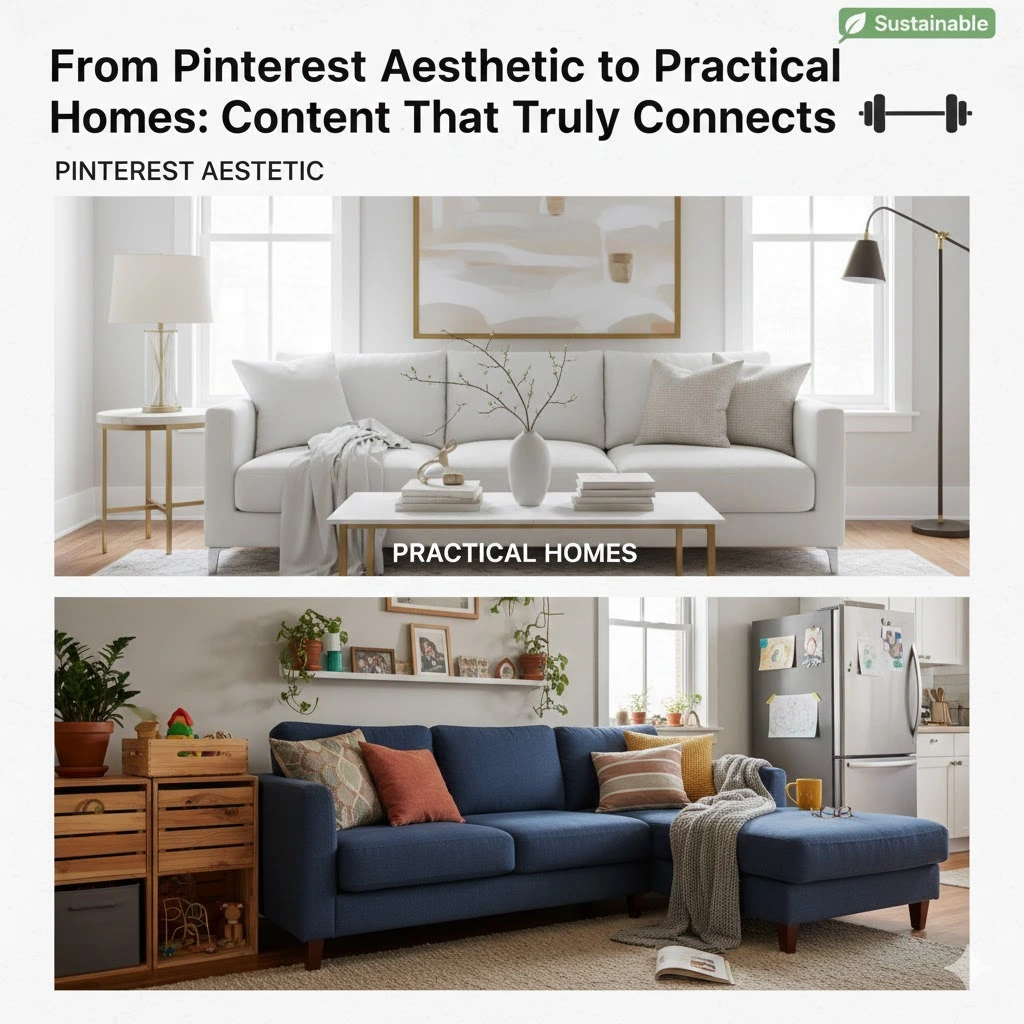
For years, the world of home decor content was dominated by what many call the “Pinterest aesthetic.” This was a world of crisp white sofas and zero clutter and rooms that looked like nobody actually lived in them. While these images were beautiful to look at, they often left the average person feeling a bit defeated. In 2026, we are seeing a refreshing change as audiences move away from staged perfection and toward practical homes. People are no longer just looking for a “vibe” but are searching for spaces that work for real life and real families.
This transition is a huge opportunity for anyone working within the creator economy 2026. The goal is no longer to show an impossible dream but to provide content that connects with the everyday struggles of maintaining a house. When you show a kitchen that actually has dishes in the sink or a living room that needs to be child proofed, you are practicing digital creator authenticity. This honesty is what keeps viewers coming back because they finally see their own lives reflected in the content they consume.
Bridging the Gap Between Beauty and Function
Having a practical home does not mean you have to give up on style. The new wave of home decor content focuses on “livable interior design.” This means finding furniture that looks high end but is made of durable and stain resistant fabrics. It means choosing storage solutions that are hidden but easy to access. Creators who can bridge the gap between a Pinterest aesthetic and a functional space are becoming the most trusted voices in the industry.
When you share functional home decor tips, you are giving your audience a roadmap to success. You are telling them that they can have a beautiful home even if they have pets or kids or a small budget. This shift toward realistic home styling is much more inclusive. It allows everyone to feel like they can participate in the joy of decorating without needing a professional cleaning crew or a massive renovation budget.
Building Trust Through the Messy Middle
The “messy middle” is where the strongest audience connection is built. Instead of just showing the “after” photo of a room makeover, 2026’s top creators are showing the “during” phase. They show the dust and the wrong paint colors and the moments where they wanted to give up. This transparency builds a massive amount of audience trust because it proves that you are not just a brand but a real person facing real challenges.
In the world of sustainable living spaces, this approach is even more important. People want to know how to fix what they already own or how to find vintage pieces that last. When you show the process of sanding down an old table or repairing a loose chair leg, you are teaching a valuable skill. This moves the conversation from “look what I bought” to “look what I built.” This is the core of digital creator authenticity in the modern age.
Also Read: Lifestyle creators and the attention economy what actually works
The Power of Purposeful Design
As our homes continue to serve as offices and gyms and schools, the demand for purposeful design has never been higher. Practical homes are those that adapt to the changing needs of the people inside them. Content that highlights modular furniture or lighting that changes based on the time of day is incredibly popular right now.
Creators who focus on livable interior design are helping their followers solve actual problems. They are showing how to make a studio apartment feel like a palace or how to turn a dark basement into a bright workspace. This type of home decor content is much more than just pretty pictures; it is a service. By helping people improve their daily environment, you are improving their quality of life. This is why the shift from the Pinterest aesthetic to reality is so powerful.
The Future of Home Content: Connection Over Comparison
As we look deeper into 2026, the creators who will stay relevant are those who prioritize connection over comparison. We are moving away from the era of “keeping up with the Joneses” and into an era of “living well with what you have.” This means celebrating the quirks of an old house or the unique way a family uses their dining table.
Also Read: Why lifestyle content needs a point of view to survive algorithm
By focusing on sustainable living spaces and functional home decor, you are building a brand that is resilient. You are not chasing a fleeting trend that will be outdated by next month. Instead, you are building a community based on shared values and practical wisdom. The journey from a Pinterest aesthetic to a practical home is a journey toward a more honest and fulfilling digital world.
FREQUENTLY ASKED QUESTIONS
What is the main difference between a Pinterest aesthetic and a practical home?
A Pinterest aesthetic is often focused purely on the visual appeal and may not take into account how a person actually uses the space. A practical home focuses on functional home decor and livable interior design, ensuring that the space is easy to maintain and comfortable for daily activities.
How can I make my home look like a Pinterest board without it being impractical?
The key is to use “closed storage” and durable materials. You can achieve the look of home decor content you see online by keeping surfaces clear but using baskets and cabinets to hide the daily mess. Choose rugs and fabrics that are easy to clean so your Pinterest aesthetic can survive real life.
Is realistic home styling boring for viewers?
Not at all. In fact, most viewers in 2026 find realistic home styling more engaging because it feels achievable. Showing how you solve a real life problem, like a tiny closet or a dark hallway, provides more value than just showing a perfect room. This is a great way to increase audience trust.
How do sustainable living spaces fit into the practical home trend?
Sustainable living spaces are naturally practical because they focus on quality over quantity. By choosing well made and eco friendly items, you are creating a home that lasts longer and requires less frequent replacement. This aligns perfectly with the goal of building practical homes that stand the test of time.