




Not all viral trends begin with algorithms and aesthetics. Some start with a quiet, honest emotion, and then grow because people recognise themselves in it. The You&Me digital movement is one such story. What began as a simple act of gratitude by blood cancer and thalassemia survivors evolved into a nationwide social media conversation about second chances, empathy, and the urgent need for blood stem cell donors in India.
At the heart of this movement were survivors. Real people. Real lives. Real thank-yous.
In June, survivors began posting Instagram Reels addressed to the donors who saved their lives. No filters. No scripts. Just gratitude. These posts didn’t aim to trend, but they did it because authenticity travels faster than any hashtag strategy.
Also Read: Why Viral Moments Matter in the Attention Economy
A people-powered movement
The early You&Me posts struck a nerve. Viewers didn’t just watch; they responded. Inspired by survivor-led storytelling, employees and volunteers from DKMS Foundation India joined in, sharing their own You&Me moments with dedications to mentors, caregivers, family members, and friends who stood by them during difficult chapters.
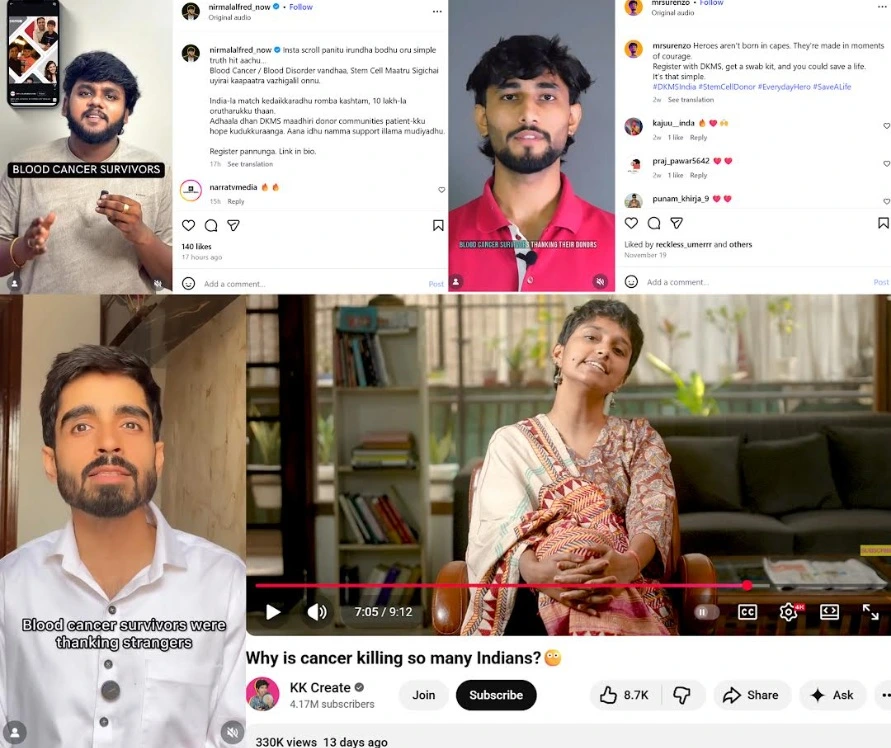
What followed was organic momentum. Over 1,000 individuals across India posted You&Me tributes on Instagram. Digital creators such as KK Create, Harshit Arora, Mr. Surenzo, and Nirmal Alfred amplified the message, helping the campaign cross one million views.
But the numbers were never the point. The impact was.
Each post carried a subtle reminder: behind every transplant is a human connection. And behind every connection is a potential life saved.
Why it mattered beyond social media
While You&Me looked like a trend, it functioned like a public service campaign, without feeling like one. According to Patrick Paul, the movement helped normalise conversations around stem cell donation, an area still surrounded by misinformation and hesitation in India.
The urgency is real. Only 0.09 percent of India’s eligible population is registered as blood stem cell donors. Every five minutes, someone in India is diagnosed with blood cancer. Over 10,000 children are born with thalassemia major each year. Delays in finding a donor can be life-threatening.
You&Me bridged that awareness gap not through fear, but through gratitude. It reframed donation as a shared human story rather than a medical abstraction.
Also Read: From Viral Reels to Real Fame: Who’s Actually Winning India’s Creator Economy?
As the initial digital wave settled, its legacy remained. Conversations started, registrations encouraged and awareness carried forward by stories that people will remember long after the reels stop circulating.
You&Me proved something powerful. Social media doesn’t always need outrage to move people. Sometimes, it just needs honesty.
By centring survivors and letting gratitude lead, the movement transformed a deeply personal emotion into collective action. In doing so, it reminded India that a single act of kindness can ripple into second chances at life.
Frequently Asked Questions
Who started the You&Me movement?
The movement was initiated by blood cancer and thalassemia survivors sharing gratitude for their stem cell donors.
What was DKMS Foundation India’s role?
DKMS Foundation India recognised, amplified, and supported the movement to raise awareness about stem cell donation.
Why is stem cell donation awareness important in India?
India has a severe shortage of registered donors despite high incidence of blood disorders.
Who can register as a stem cell donor?
Individuals aged 18–55, in good health, with a BMI under 40.
Is the You&Me movement still active?
While the viral phase has slowed, its impact continues through awareness and ongoing registrations.