





Digital marketing today feels like walking a tightrope. On one side, there’s the pressure to deliver immediate ROI. On the other, the fear of missing out on the next big platform, format or technology. Between algorithms changing overnight and ad costs climbing steadily, decision-making has never been tougher.
This is where the 70/20/10 rule in digital marketing quietly earns its relevance. It doesn’t promise shortcuts or viral miracles. Instead, it offers balance. This report is presented by KodeGrid, a company that helps startups grow through strategic 360° marketing strategies.
Understanding the 70/20/10 framework
At its core, the 70/20/10 rule is about intentional allocation of budgets, time and creative energy.
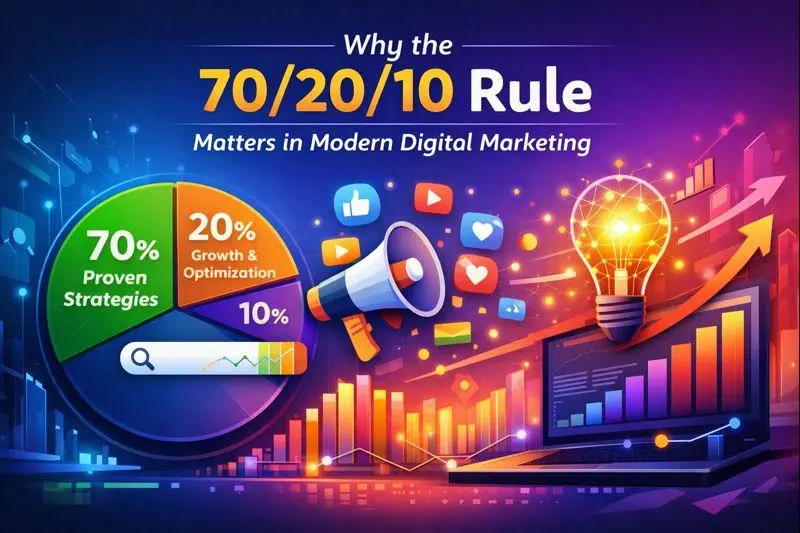
70 per cent goes to proven strategies: These are the channels and tactics that consistently deliver results. SEO, paid search, social ads, email marketing and conversion rate optimisation are part of this bracket. They are predictable, measurable and scalable.
20 per cent is reserved for optimisation and expansion: This is where good becomes better. You refine creatives, improve landing pages, test new audience segments, tweak funnels and expand onto adjacent platforms.
Also Read: Affiliate Marketing 101 for Gamers: Turn Your Passion into Profit
10 per cent is dedicated to innovation and experimentation: This includes AI tools, emerging platforms, new ad formats, voice search and immersive content. It comprises ideas that may or may not work today but could define tomorrow. The insights matter more than immediate returns.
In a fast-moving digital ecosystem, this mix keeps brands grounded yet curious.
Why this rule is more relevant than ever
Modern digital marketing is no longer about choosing one ‘best’ channel. It’s about the combined efforts. Rising competition, stricter data privacy norms and fragmented attention spans mean brands can’t afford extremes.
The 70/20/10 rule creates stability without stagnation. The 70 per cent ensures consistent performance. The 20 per cent fuels incremental growth. The 10 per cent keeps the brand future-ready.
It also supports a 360-degree digital marketing approach, ensuring presence across paid, owned, and earned touchpoints. From awareness to conversion, the framework naturally aligns with full-funnel thinking.
Importantly, the rule isn’t rigid. It adapts. Startups may lean more heavily on experimentation. Mature brands may double down on proven channels. The principle remains the same: diversify intelligently, not impulsively.
Applying the 70/20/10 rule in the real world
Implementation requires clarity. Start by auditing your current efforts. Identify what’s driving results. That’s your 70 per cent. Next, look for optimisation opportunities such as creative refreshes, audience testing, funnel improvements. That’s your 20 per cent. Finally, earmark a small, protected budget for experiments. No panic. No pressure. That’s your 10 per cent.
Track performance. Review quarterly. Rebalance when needed. The rule should guide decisions, not cage them.
Also Read: How Influencers are Marketing Their Own Brands in 2026
The 70/20/10 rule works because it mirrors how smart businesses think. It is disciplined, data-led and forward-looking. In a digital world obsessed with quick wins, this framework rewards patience and perspective.
If 2026 demands anything from marketers, it’s this: perform today, optimise constantly, and experiment wisely. The 70/20/10 rule helps you do all three, without losing your balance.
Frequently Asked Questions
Is the 70/20/10 rule suitable for small businesses?
Yes. Small businesses can scale it to their budgets while maintaining balance.
Does the rule apply only to budget allocation?
No. It also applies to time, team effort, and creative focus.
How often should allocations be reviewed?
Ideally every quarter, or when market conditions change significantly.
Can the ratios change?
Absolutely. The rule is a guideline, not a fixed formula.
Why is the 10 per cent experimentation important?
Because today’s experiments often become tomorrow’s core growth drivers.
Image courtesy: KodeGrid