




The future of work is no longer a distant concept. According to Randstad Digital’s latest industry predictions, 2026 will mark a defining moment when artificial intelligence moves from experimentation into the very architecture of how organisations operate. The global talent and technology firm describes this shift as ‘The Great Integration,’ a phase where autonomous AI systems, blended human-machine teams, and stronger governance frameworks become the new normal across industries.
From healthcare and finance to retail and manufacturing, AI is expected to evolve into the operating system of work itself. For businesses and professionals alike, this transition signals both opportunity and disruption, redefining how value is created and how talent fits into the equation.
From pilots to full-scale integration
For the past few years, companies have tested AI through pilots and proof-of-concept projects. Randstad Digital predicts that 2026 will be the year these experiments mature into enterprise-wide systems. Autonomous AI agents will increasingly manage complex, multi-step workflows, coordinated by orchestration platforms that connect data, decisions, and execution.
Rather than acting as isolated tools, AI systems will sit at the core of operations, influencing everything from customer interactions to internal processes. Organisations that succeed will be those that treat AI not as an add-on, but as foundational infrastructure.
Why governance becomes a competitive edge
As AI adoption accelerates, regulation is quickly catching up. With evolving global standards, including stricter European Union AI frameworks, governance is no longer optional. Randstad Digital highlights explainable AI, transparency, and security as essential requirements for scaling responsibly.
In 2026, organisations that embed governance into their AI systems from the start will gain a strategic advantage. Trust, auditability, and compliance will matter just as much as speed and innovation, especially in regulated industries such as banking, healthcare, and insurance.
The rise of the blended workforce
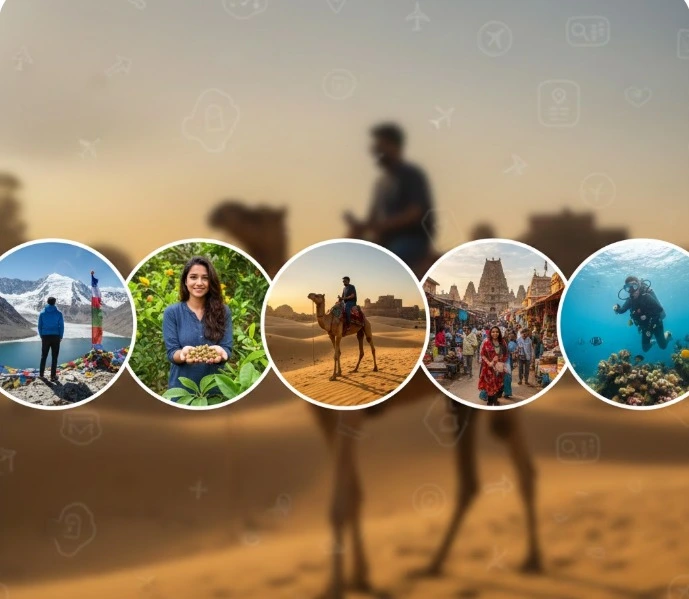
One of the most striking predictions in the report is the growth of a blended workforce. Demand for skills in AI, cloud computing, cybersecurity, and data analytics continues to outpace supply. To bridge this gap, companies are increasingly tapping into global freelance talent and digital nomads.
The global digital nomad population is expected to grow from around 50 million today to more than 60 million by 2030. This shift allows organisations to access specialised expertise without geographical constraints, reshaping traditional employment models and redefining what a global workforce looks like.
How roles are evolving across industries
As AI takes over repetitive and operational tasks, human roles are moving up the value chain. Randstad Digital predicts a transition from task execution to intelligent orchestration, where professionals guide workflows, apply judgment, and focus on creativity and decision-making.
This change will be felt across sectors. In healthcare and life sciences, AI-driven systems will modernise operations while supporting better patient outcomes. In retail, brands will increasingly split into cost leaders and experience leaders, with AI-powered personalisation becoming a key differentiator. Manufacturing and automotive industries will lean heavily on software-defined systems, digital twins, and global talent pools to stay competitive.
Banking and financial services will see a move toward autonomous, real-time financial experiences, replacing static products with adaptive, personalised services. Meanwhile, technology and telecom enterprises will push beyond pilots into fully integrated AI ecosystems.
The end of the full-stack generalist
Another notable shift predicted for 2026 is the decline of the traditional full-stack generalist. As technology becomes more complex, talent will become increasingly specialised. Expertise in AI and machine learning, cybersecurity, cloud-native development, and even quantum technologies will be in high demand, supported by flexible, blended workforce models.
Randstad Digital’s 2026 outlook makes one thing clear: the future of work will be shaped by how well organisations integrate AI, human expertise, and governance. The great integration is not just about technology adoption, but about rethinking workforce design, leadership, and value creation.
For businesses, the challenge is to move fast without losing trust. For professionals, it is about adapting skills and embracing roles that combine human insight with intelligent systems. As 2026 approaches, those who prepare for this integrated future will be best positioned to thrive in an AI-driven world.