




AI agents are no longer futuristic concepts confined to labs and demos. They are already booking meetings, analysing data, handling customer queries, generating reports, and supporting decision-making inside real organisations. As businesses move from experimenting with AI to embedding it into everyday workflows, one question becomes unavoidable: is your workforce ready?
Preparing people for AI agents is not about replacing humans. It is about redesigning how humans and intelligent systems work together. The companies that get this right will see faster adoption, higher productivity, and stronger employee trust.
Here’s how organisations can realistically and responsibly prepare their workforce for an AI-agent-driven future.
Start with mindset, not machines
The biggest barrier to AI adoption is not technology, it’s fear. Employees often worry about job loss, loss of relevance, or being judged against machines. Before rolling out AI agents, leaders need to clearly communicate what AI is and what it is not.
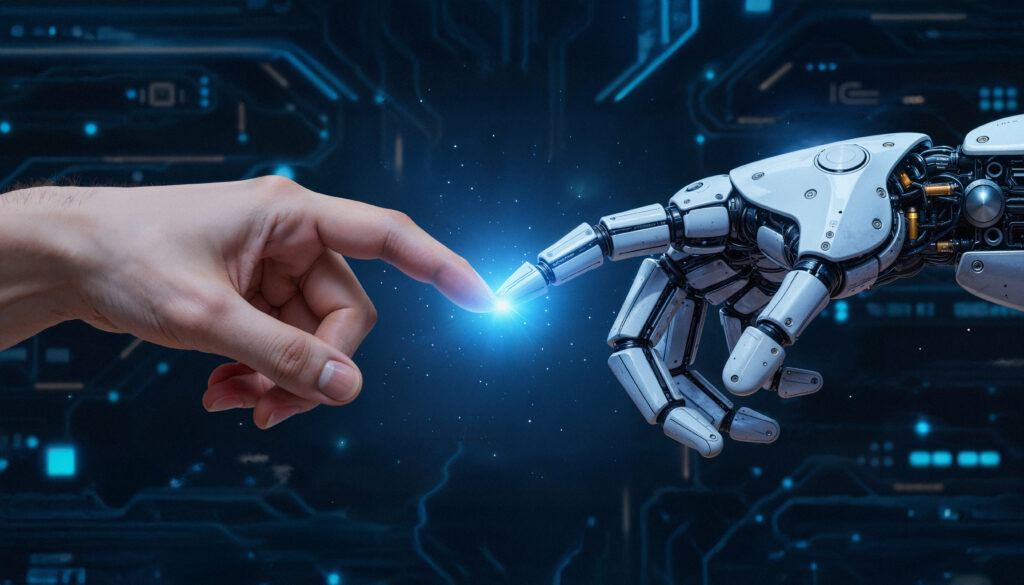
AI agents should be positioned as collaborators, not competitors. Internal demos and open conversations help demystify AI and reduce anxiety. When people understand that AI is meant to remove repetitive tasks and free them for higher-value work, resistance drops significantly.
Make AI literacy a core workplace skill
Every employee does not need to become a data scientist, but everyone does need basic AI literacy. This includes understanding how AI agents work, what they can and cannot do, and how to interact with them effectively.
Short, role-specific training programmes work best. For example, sales teams can learn how AI agents assist with lead scoring and follow-ups, while HR teams can learn how AI supports hiring workflows. The goal is confidence, not technical mastery.
Organisations that invest early in AI literacy reduce misuse, dependency, and frustration later.
Redesign roles around human judgement
AI agents excel at speed, pattern recognition, and automation. Humans excel at context, ethics, creativity, and empathy. Preparing the workforce means redesigning roles to focus more on judgement and decision-making rather than task execution.
Job descriptions will evolve. Employees may spend less time doing and more time reviewing, guiding, and orchestrating AI-driven workflows. Managers should help teams understand how their roles are changing and why those changes matter.
This shift also opens opportunities for new roles such as AI workflow managers, AI quality reviewers, and human-in-the-loop specialists.
Encourage experimentation without fear
AI adoption works best when employees are allowed to explore tools in a safe environment. Sandbox access, pilot projects, and internal hack days encourage curiosity and innovation.
Importantly, organisations should normalise learning through trial and error. Not every AI agent will work perfectly on day one, and that’s acceptable. When employees feel safe experimenting, they are more likely to discover meaningful use cases that leadership may overlook.
This culture of experimentation accelerates adoption far more effectively than top-down mandates.
Build governance alongside capability
As AI agents become more autonomous, governance becomes essential. Employees must understand where AI decisions need human oversight, how data is handled, and what ethical boundaries exist.
Clear guidelines around accountability, transparency, and escalation prevent misuse and build trust. Explainable AI, audit trails, and review checkpoints should be embedded into workflows so employees feel supported, not monitored.
When governance is framed as protection rather than control, adoption becomes smoother.
Reskill for the long term
Preparing the workforce is not a one-time initiative. AI capabilities will evolve rapidly, and so must skills. Continuous learning programmes, internal certifications and access to external courses help employees stay relevant.
Soft skills become even more important in an AI-driven workplace. Critical thinking, communication, adaptability, and ethical reasoning will define future leaders more than technical ability alone.
Companies that invest in reskilling send a strong message: we are growing with AI together.
Preparing people is the real AI strategy
AI agents may be powerful, but people determine whether they succeed. Preparing your workforce is not about faster tools or bigger budgets, it is about trust, learning, and thoughtful design.
When employees feel informed, empowered, and supported, AI agents become productivity partners rather than sources of disruption. The future of work is not human versus machine. It is human plus AI, working smarter together.