




For years, the smartphone has been our digital tether, an omnipresent extension of our minds. But what if there was a better way? A more seamless, less intrusive interaction with our digital lives? In 2025, we’re closer than ever to answering that question, thanks to an explosion of cutting-edge wearable AI hardware. The dream of a truly hands-free, phone-optional existence is no longer science fiction; it’s being worn on wrists, pinned to lapels, and perched on noses across the globe.
This isn’t your clunky smartwatch of yesteryear. We’re talking about devices powered by sophisticated AI, designed for “ambient computing”—technology that fades into the background, ready when you need it, invisible when you don’t. The race to become the ultimate smartphone replacement is heating up, with innovative AI pins and advanced smart glasses leading the charge. But are these gadgets ready to fully unchain us from our pocket rectangles? Let’s dive in.
AI Pins & Smart Glasses 2025: Your New Digital Butler
The landscape of wearable AI hardware is diverse, but two categories are truly pushing the boundaries: AI pins and smart glasses.
The AI pins of 2025 are sleek, minimalist devices designed to be worn on clothing. Think of them as your personal, proactive digital assistant. Equipped with powerful AI models, high-quality microphones, and laser projectors, they offer a completely hands-free interface. Need to send a message? Just speak. Want to translate a foreign language in real-time? It’ll project the translation onto your hand. Lost in a new city? It whispers directions discreetly. Devices like Humane’s Ai Pin, while still finding their footing, have paved the way for more refined versions that boast longer battery life, enhanced privacy features, and more intuitive gestural controls. They excel at quick, essential tasks, making them perfect for those seeking a genuine digital detox from constant screen-staring.
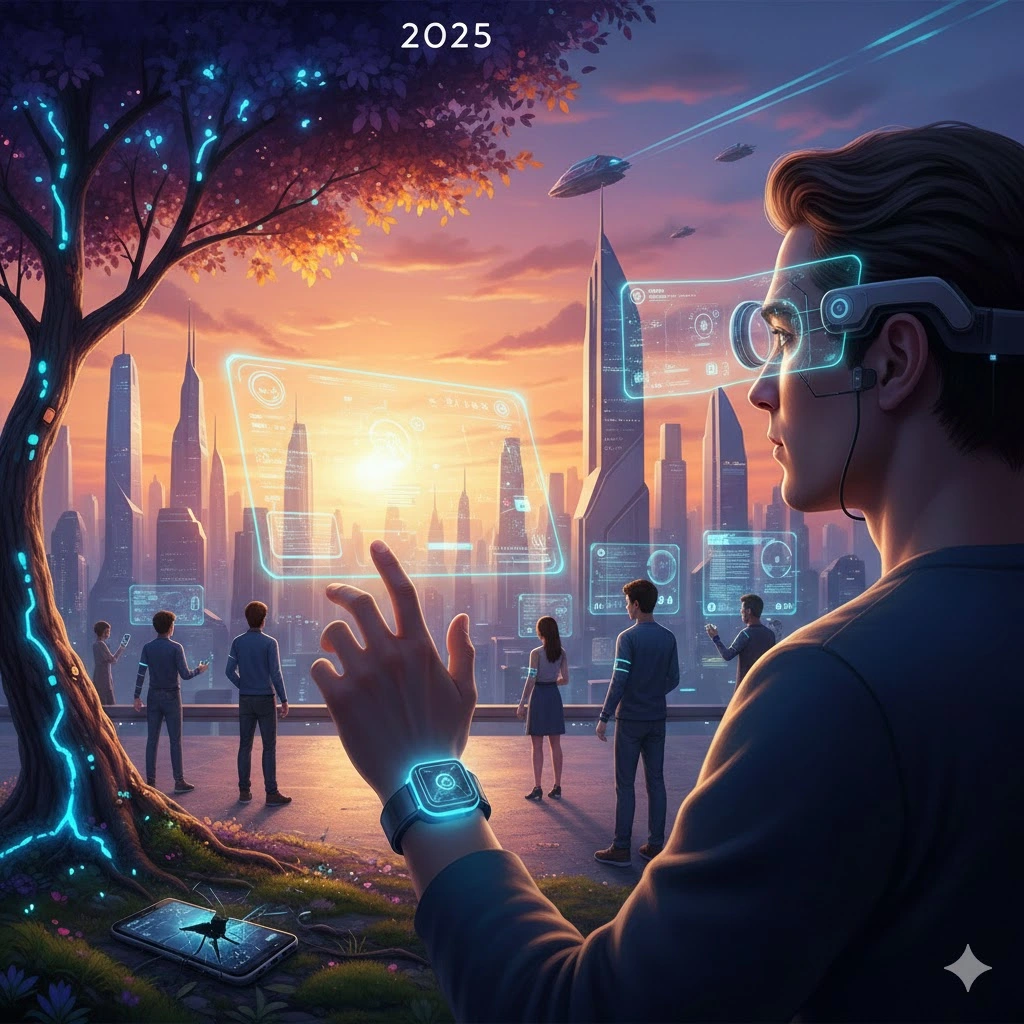
Then there are the smart glasses 2025. These aren’t just for looking cool. Augmented reality (AR) capabilities have reached a new zenith, blending digital information seamlessly with your physical world. Imagine seeing turn-by-turn directions overlaid directly onto the road, having real-time data pop up during a meeting, or even experiencing immersive gaming without being tethered to a console. Companies like Apple, Meta, and a host of startups are refining their augmented reality glasses to be lighter, more stylish, and packed with features like biometric sensors for health tracking and high-fidelity spatial audio. While current iterations still lean into niche uses, their potential for a truly integrated digital life is immense.
Can These Devices Truly Replace Your Phone?
This is the million-dollar question for future tech enthusiasts. While these devices are brilliant at their core functions, a complete smartphone replacement is still a journey, not a destination.
AI pins are fantastic for communication, navigation, and information retrieval. They free your hands and reduce screen time, fostering a more present engagement with your surroundings. However, they aren’t designed for complex visual tasks. You won’t be editing videos, playing graphically intensive games, or doom-scrolling Instagram on an AI pin. They’re about utility and efficiency.
Smart glasses, on the other hand, offer a richer visual experience, especially with AR. They can handle multimedia consumption and light productivity tasks in a novel way. But battery life remains a hurdle, and the social acceptance of wearing them constantly is still evolving, especially in more conservative environments.
Ultimately, in tech trends 2025, these devices are best viewed as powerful companions, not sole successors. They augment your capabilities, taking over many daily interactions that once required pulling out your phone. For true digital minimalism, you could conceivably leave your smartphone at home for short periods. But for now, the smartphone remains the central hub for creation, intense media consumption, and the myriad of apps we’ve come to depend on. We’re moving towards a distributed computing model, where different devices handle different aspects of our digital lives, with the phone slowly becoming less indispensable.
Conclusion
The year 2025 marks a thrilling chapter in the evolution of personal tech. Wearable AI hardware like sophisticated AI pins and advanced smart glasses are pushing the boundaries of what’s possible, offering glimpses of a future where our digital lives are more integrated and less intrusive. While a full smartphone replacement isn’t quite here yet, these devices are undoubtedly chipping away at its dominance, paving the way for a more seamless, hands-free, and context-aware interaction with the world around us. The smartphone might not be dead, but it’s certainly got some serious competition.
FAQ: Your Burning Questions About Wearable A
Q: Are these devices expensive? A: Initial models are premium-priced, but as with all tech, expect more affordable options by late 2025, especially from newer market entrants.
Q: What about privacy concerns with always-on microphones/cameras? A: Most devices include clear indicators (lights, sounds) when recording. Manufacturers are also prioritizing on-device processing to minimize data sent to the cloud.
Q: Can I use them for gaming? A: Smart glasses with AR capabilities offer unique immersive gaming experiences. AI pins are not designed for traditional gaming, but excel in voice-controlled interactive experiences.
Q: Is learning to use them difficult? A: Developers are focusing on intuitive voice and gesture controls, aiming for a short learning curve. Many users find the hands-free interaction remarkably natural after a few days.