




Gone are those times when AI-generated videos were easy to spot, now is the era of deep fakes, and realistic AI videos, blurring the lines between reality and fake. And one of the world’s biggest video platforms, YouTube was recognising this gap.
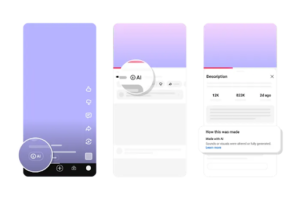
Thus, on May 27 YouTube announced the improvement on the visibility of the AI-label that moved out of descriptions and into plain sight, below the video player on long-form content, overlaid directly on Shorts. But what marks as a bigger shift is not the better visibility of AI-labels.
The end of the undisclosed AI-content era
YouTube is no longer banking on creators to self-disclose. Its new automated detection system will label significant photorealistic AI content whether a creator discloses it or not, closing every window for ambiguity. This is the platform bracing for a future where AI-generated video explodes in volume, deepfakes become harder to detect, and audience trust grows increasingly fragile.
This was not an overnight launch
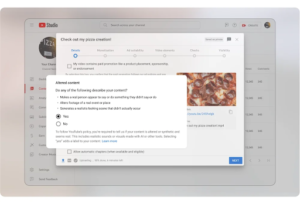
YouTube didn’t react overnight. In November 2023, it set the groundwork, requiring creators to disclose realistic AI use, with labels in descriptions and, for sensitive topics, directly on the video player, it was a framework built on trust and creators were expected to self-report. By March 2024, that trust became policy, and YouTube launched a formal disclosure tool in Creator Studio, requiring creators to flag synthetic faces, fabricated events, and AI-generated voices. YouTube quietly reserved the right to step in when creators stayed silent.
Not the end of generative AI but the beginning of its authentic use
For brands, this update is not a warning; it is an opportunity to reset. Clearer AI labelling means cleaner creative territory. Brands that lean into transparent AI production, labelled, intentional, and well-crafted, can position themselves as innovators rather than imitators. The label is no longer a mark of inauthenticity.
For creators, it carries no monetisation penalty and no algorithmic punishment. What it carries is accountability, and those who have built genuine audience trust have nothing to lose. But those quietly passing off AI content as original are now exposed, not by scandal, but by infrastructure.
Generative AI is the new normal
AI in content creation is no longer a trend; it is the new normal. And while YouTube’s direction is clear, one significant gap remains: the platform has not specified how its automated detection handles partial AI use. A creator who used AI to enhance lighting, clean up audio, or generate B-roll will sit in a grey area that may trigger the automated AI-label. That gap, between AI-assisted and AI-generated, is precisely where the creator disputes will come from, and that is the conversation YouTube has yet to have.