

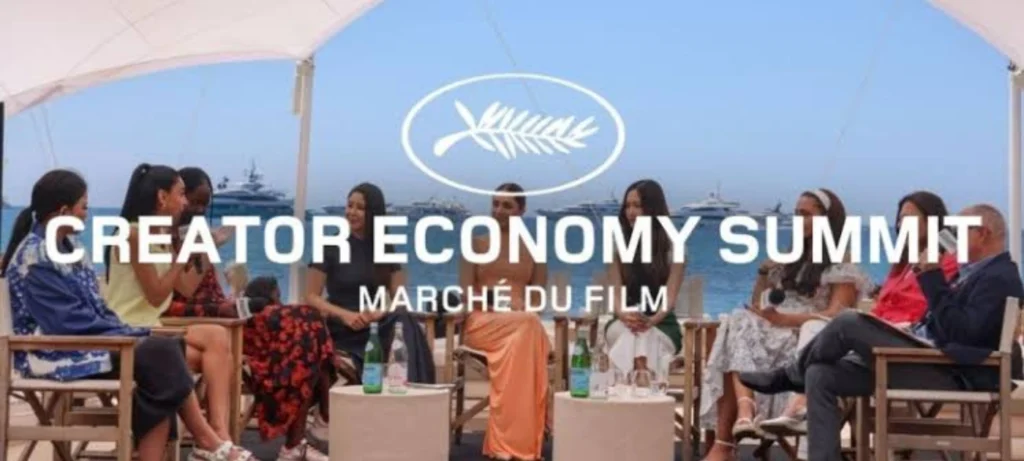




On May 17, at Cannes, the Marché du Film hosts its first Creator Economy Summit. Studio heads, digital talent, and platform executives will sit down to talk about how creators are changing the way films get made, funded, and distributed.
While the rest of the world is catching up, India has been living like this for years.
India already paid creators ₹250 crore to market its films
Indian cinema did not wait for Cannes to figure this out. According to a December 2025 report by Qoruz, the Indian film industry spent over ₹250 crore on creator-led promotions in the past year. Creators and meme pages put out 610,000 posts that collectively pulled 2 billion engagements across social platforms. Between 60% and 70% of all films released in 2025 used creator campaigns, not as a side strategy but as the main way to build buzz before opening weekend.
Studios are not hoping for virality, they are buying it. Meme accounts, micro-influencers, and reaction creators are being paid to push a film’s dialogue or hook step in reels and shorts feeds of people who need to feel like they are missing out if they do not buy a ticket. Micro-creators drove more than 51% of total posts and engagements. The engine runs on everyday creators, not celebrities.
Cannes is hosting panels about building bridges between creators and cinema. In India, that bridge carries ₹250 crore worth of traffic every year.
How OTT made creators the safe bet
India’s ₹33,000 crore OTT market has 601 million viewers and more than a dozen platforms fighting for them. Acquiring subscribers is expensive and keeping them is harder. Streaming executives in India worked out years ago that casting a creator with a loyal following costs far less than building that same awareness through a marketing campaign.
When Netflix cast Prajakta Koli as the lead in Mismatched, it was a business calculation. Her audience came with her, already watching, already invested. A traditional actor needs a full campaign to create that recognition from scratch whereas a creator brings it on day one.
Mismatched is now heading into its fourth season. India’s OTT platforms solved this problem years before the Cannes panellists put it on the agenda.
More Read

Creators are entering Bollywood on their own terms
India’s biggest creators are not crossing into films because they were invited rather they are crossing over as registered businesses, bringing their own audiences and their own leverage into every negotiation.
An EY-Collective Artists Network report projects India’s influencer market will reach ₹3,375 crore. 15.2% of active Indian creators are already registered as formal GST entities. A creator who walks into a casting conversation with a registered company and 10 million verified followers is not there to audition but to negotiate.
The Cannes summit has a panel called “Talent 2.0: Scouting in the Digital Drama Era” and Indian talent agencies already have them on their roster.
The creators who built their own studios
The clearest sign that India’s creators do not need outside validation is that the most successful ones stopped looking for it.
Bhuvan Bam did not just act in Taaza Khabar and Dhindora. His production house, BB Ki Vines Productions, developed and produced both and he even runs a studio and stars in its shows. The Viral Fever started as a YouTube channel and has grown into one of India’s most reliable independent studios, delivering hit after hit to major OTT platforms without any Bollywood co-production.
Every case follows the same path. Build an audience, turn that audience into leverage, use that leverage to fund production, and the production house becomes the studio. The traditional Bollywood producer, the one who used to decide what got made and who got to be in it, has been cut out of the loop.
What this actually changes for India
The Cannes Creator Economy Summit matters for one practical reason. The Marché du Film is where international co-productions get financed and global distribution deals get signed. For India’s creator-built studios and crossover stars, that access means international buyers, cross-border funding, and distribution networks that India’s domestic OTT platforms cannot reach.
Cannes is not telling Indian creators something new. It is opening a room that India’s creators have been qualified to walk into for years. The studios that should be paying attention are the legacy Bollywood ones that spent that time trying to keep the door closed.