





Indian creators: According to the recently released Kofluence Decoding Influence: Annual Research Report 2026, India’s influencer marketing sector is currently valued at roughly ₹3,000 to ₹3,500 crore. Sustaining an impressive 22% Compound Annual Growth Rate (CAGR), the industry is projected to reach a massive ₹4,500 to ₹5,000 crore by 2027.
- Why influencing is no longer a casual hobby
- Why the formalisation is not limited top-tier influencers
- How brands are treating influencers as performance linked assets
- How creator economy is being formalised
- The creator economy boom is further expanded by AI
- How the next decade of an institutionalized economy looks like
The creator economy is not just growing; it is undergoing a profound, formalized transformation that will dictate the rules of digital commerce for the next decade and beyond.
Why influencing is no longer a casual hobby
Gone are the days when influencers used social media out of sheer boredom. The era of closing a brand deal through a quick WhatsApp message, an informal rate card, a wire transfer to a personal bank account, and a vague handshake agreement is officially behind us. This transition from an internet influencer to a formal business entity isn’t just about changing a social media bio to CEO or a Solo-preuneur. It requires a complete structural rewiring of how a creator operates, pays taxes, and builds equity. As of 2026, as stated in the Kofluence report, a staggering 15.2% of India’s active creators are now registered as formal business entities or GST-paying individuals.
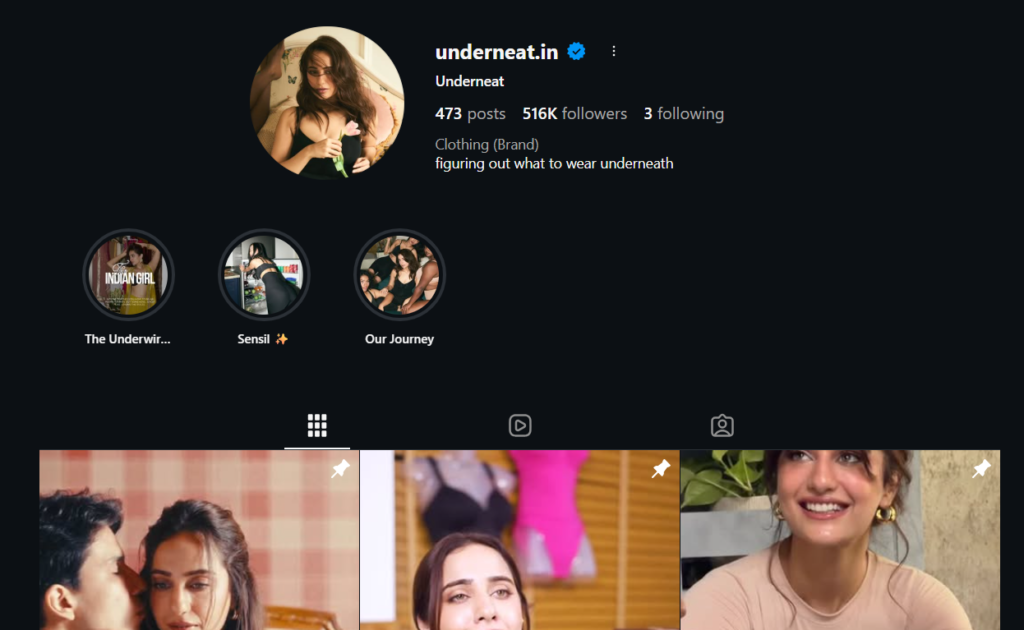
The formalization of the creator economy essentially marks the birth of new-age media houses and Direct-to-Consumer (D2C) brands. The Kofluence report has very well highlighted the rise of this formalisation by stating that over 15.7% of creators have already established their own independent brands or product lines, some noteworthy names include – UnderNeat by Kusha Kapila, and Mrucha Beauty by Mrunal Panchal . With an additional 22% actively preparing to follow suit, it is glaringly evident that the modern creator class is focused on building lasting corporate equity.

In tandem, social media platforms have fundamentally evolved from mere content distributors into high-functioning commercial engines. Instagram alone currently serves as the primary infrastructure for 3.3 to 3.7 million creators across the country.
The data backing this professional pivot is undeniable. This wave of creators having to register themselves as legal entities isn’t just a structural shift but rather a new entry barrier to a more formalised ecosystem.
Why the formalisation is not limited top-tier influencers
When it comes to digital conversion, scale does not always equate to success. Currently, 52% of marketers find micro-creators with 10K–100K followers best suited for hyper-localised campaigns, where trust and cultural resonance significantly outperform sheer follower count. But digging deeper into the grassroots of the creator ecosystem, we find that Nano creators are truly taking the front seat. The 2026 data reveals that 61.1% of all surveyed creators operate in the Nano tier (1K-10K followers), providing highly targeted and fiercely loyal community engagement that massive macro-influencers struggle to replicate.
This shift is deeply tied to India’s regional internet boom. With the country crossing 900 million internet users, Tier 2, 3, and 4 cities have become the undeniable operational center of gravity for the creator economy. Over 62% of creators report a massive increase in regional and vernacular language briefs from brands, signaling a systematic pivot toward hyper-local marketing strategies.



The business case for this regional pivot is rooted in performance data. A portfolio of Nano-creators in hyper-local vernacular markets delivers significantly higher engagement at a fraction of the cost of a metro-based mega-influencer. According to the Kofluence Report 2026, in Metro cities, average engagement rates hover between 3% and 4%, with campaign costs ranging from ₹3.8 lakh to ₹4.5 lakh.
Contrast this with Tier 3 and 4 markets where the average engagement rates soar to 4.5% to 5.5%, while the average cost plummets to just ₹35,000 to ₹90,000. It is a simple, undeniable math equation that brands can no longer ignore.
How brands are treating influencers as performance linked assets
Gone are the days when influencer marketing was treated as a disposable line item in the broader media plan. It was once an experiment reserved solely for splashy product launches, managed casually, and measured loosely. Today, it commands absolute institutionalization. The industry isn’t just shifting; it is maturing into a space where data-backed insights are the real performance indicators, entirely replacing outdated vanity metrics like likes and views.
According to the 2026 data, 13.3% of brands today directly link their creator spend to formal revenue targets, measuring exactly how many products a creator actually sold. Furthermore, another 46% of brands now demand hard performance accountability metrics on a strict campaign-by-campaign basis.
This change hasn’t happened overnight or in a single quarter. It is the culmination of years of cumulative efforts: influencers formalizing their businesses, platforms integrating direct commerce into their core product, and brands demanding actual Return on Ad Spend (ROAS).
How creator economy is being formalised
While industry watchdogs like the Securities and Exchange Board of India (SEBI) and the Advertising Standards Council of India (ASCI) are a common sight in traditional finance and corporate media, the creator economy lacked such oversight for years, largely because it was perceived as a casual digital hobby. But with billions of rupees now flowing through these channels, this structural rewiring has forced government and advertising regulators to watch the industry very closely.
The recent strict crackdown on finfluencers by SEBI, alongside updated, stringent disclosure norms from ASCI and the implementation of the Digital Personal Data Protection (DPDP) Act, is crucial evidence of how the creator economy is being rapidly formalized.
Industry leaders argue that these regulations should not be viewed as obstacles. As Kofluence Co-founder Ritesh Ujjwal notes, compliance requirements are actually structural filters. They are designed to separate the durable creators from the disposable ones. The creators who proactively build legal, ethical, and compliance frameworks into their workflows early on will monopolize institutional brand deals. Conversely, non-compliant creators, those who refuse to adapt to these strict disclosure and data rules—will simply be phased out of the lucrative corporate market.
The creator economy boom is further expanded by AI
AI is simultaneously accelerating this business evolution. AI integration is no longer a futuristic novelty. The Kofluence report highlights that 59% of creators now use AI tools regularly, with 64.4% using it for content ideation, 31.9% for creative design, and 28.1% for trend analysis. AI has effectively compressed the production overhead that once held independent creators back from operating at a massive business scale. In tandem, 61% of brands are exploring AI-led platforms for campaign management and real-time reporting.
How the next decade of an institutionalized economy looks like
Looking at the next decade, the rules of engagement have been permanently rewritten. Procurement departments, not just social media managers, will dictate the terms of creator partnerships. Creator onboarding is becoming as rigorous as any B2B vendor process, requiring standardized Vendor Master Data, DPDP-compliant data processing agreements, and stringent Service Level Agreement (SLA)-driven contracts tied directly to CPA (Cost Per Acquisition) and ROAS models.
The data points to a singular, undeniable reality: the line between an internet personality and a formal media company has been permanently erased. As Sreeram Reddy Vanga, CEO of Kofluence, aptly summarizes in the report, “India is not following global best practices in creator commerce — it is writing them.”
The Creator-Corp is no longer a distant prediction; it is the structural foundation of a fully matured industry. However, this rapid institutionalization leaves us with a critical, lingering question: does this newfound professionalism amplify the raw authenticity that built the creator economy, or does it dilute the very magic that made it work in the first place? Only time will tell.