
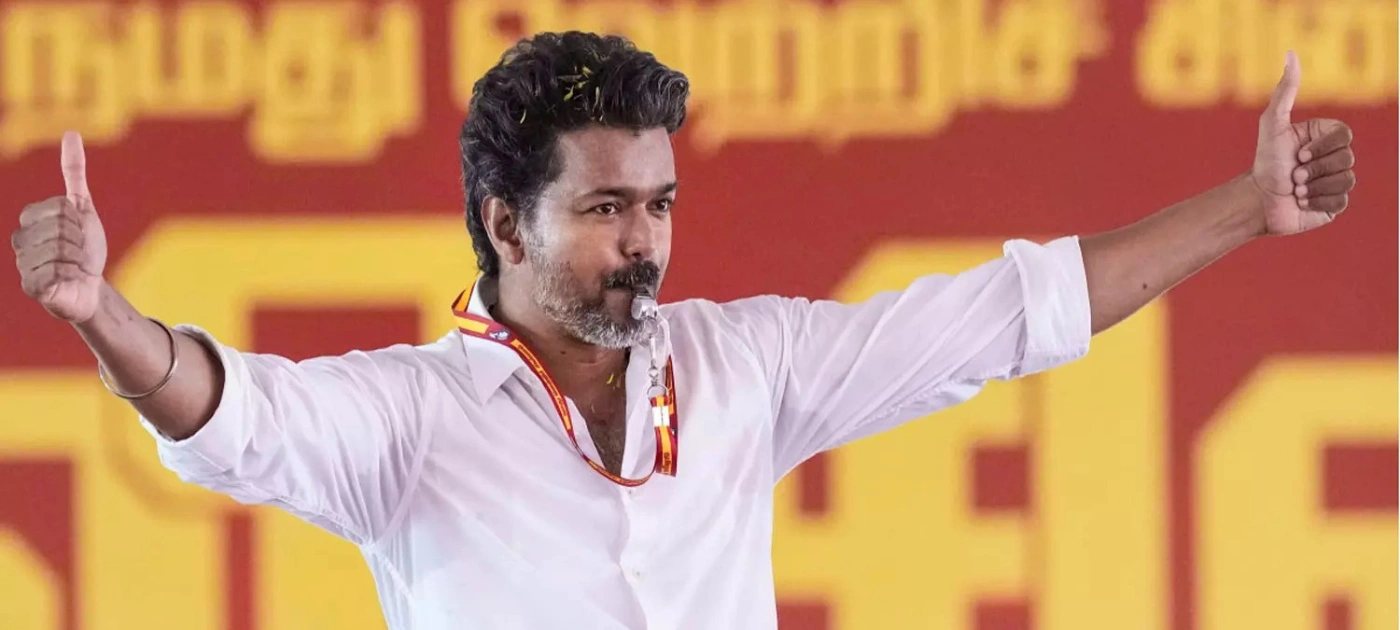


On May 10, 2026, film star-turned-politician Chandrasekhar Joseph Vijay, popularly called Thalapathy Vijay, was sworn in as the 13th Chief Minister of Tamil Nadu. His two-year-old party, Tamilaga Vettri Kazhagam (TVK), had won 108 of the 234 assembly seats on a 34.9% vote share, ending nearly six decades of alternating Dravidian rule between the DMK and the AIADMK.
The more interesting story for anyone watching the creator economy is how the campaign actually ran with almost no traditional advertising, no press conferences, and no celebrity surrogates. The work was done by his fan clubs, that too on social media platforms like Instagram and Whatsapp.
A character built across 30 years of films
Long before TVK existed, Vijay had spent his career playing the same kind of man: the angry young hero fighting corruption, defending the underprivileged, taking on a rigged system. He had a symbol his fans would chant in cinema halls: a whistle.
That whistle is now the TVK electoral symbol. Voters who pressed it on April 23 weren’t choosing just a logo, they were voting for a film image they had absorbed for 20+ years. The party didn’t have to introduce its leader as his films had already done it.
In 2009, Vijay formally organised his fan clubs under an umbrella called Vijay Makkal Iyakkam. By the time TVK launched in February 2024, the network reportedly spanned around 85,000 clubs across Tamil Nadu, with diaspora pockets in Kerala and abroad. These clubs were already doing welfare work, already mapped geographically, already trusted in their neighbourhoods.
When the party arrived, it inherited the distribution layer most political outfits spend decades trying to build. The fan clubs were not a target audience, but the creator network.
The strategy, IT firm, and distribution channel behind the reels
The campaign machinery had three pieces.
Voice of Commons was an external political strategy firm founded by Aadhav Arjuna that partnered with TVK from January 2025 for handling campaign management, booth-agent training and alliance strategy. Arjuna joined the party the same month and is now a cabinet minister. TVK’s internal IT and social media wing, set up the same day under CTR Nirmal Kumar (a former BJP and AIADMK IT-wing head), produced the digital content.

They produced short videos, Reels, repackaged speech clips, hashtag campaigns and visuals, all aimed at younger voters. Messaging stayed tightly controlled with social justice, secularism, welfare, Tamil pride. The fan clubs then ran the assets across Instagram, YouTube, X and WhatsApp.
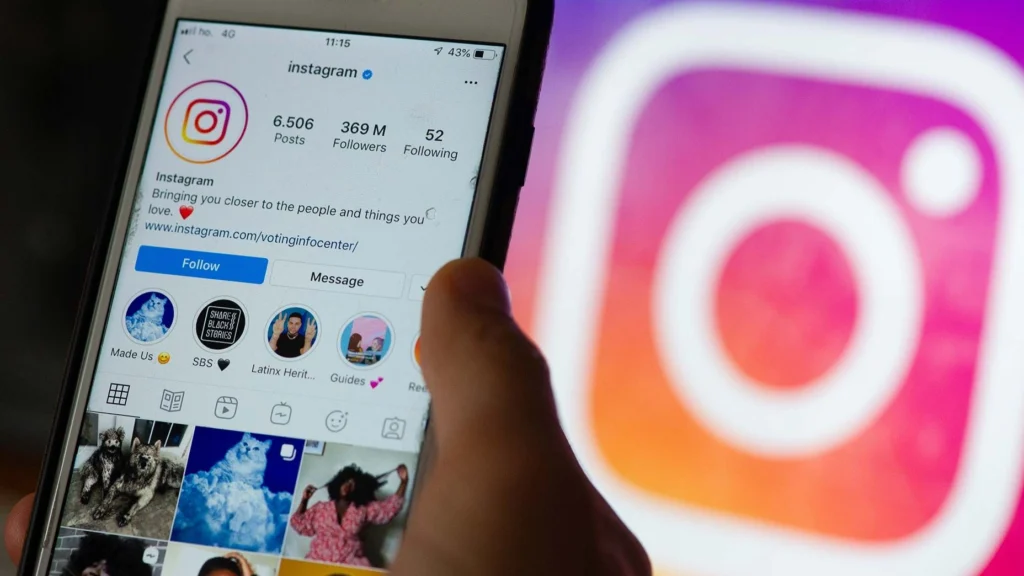
The scale showed up in real numbers when a single reel of Vijay taking a selfie with the crowd at the TVK Madurai conference on August 21, 2025 pulled 200 million views, 19 million likes and roughly 370,000 comments on Instagram (as of 15 May, 2026), reported engagement ever recorded by a South Indian celebrity. Though some analysts have questioned whether the numbers were artificially boosted. The Vijay versus the system narrative with memes, reels, fan edits circulated continuously through WhatsApp groups in the final stretch.
The growth curve matters too. Vijay joined Instagram on April 2, 2023 and hit one million followers in 99 minutes, the fastest in India and third-fastest globally, after BTS’ V (53 minutes) and Angelina Jolie (59 minutes). By August 2025, he had 14 million. By April 2026, when voters went to the polls, no rival party leader in Tamil Nadu had Instagram numbers anywhere close to his.
Some more Thalapathy Vijay campaigns
The party also built infrastructure beyond posts. The My TVK app, launched on July 30, 2025, gave a way to know about register members, manage booth-level data, log ground activity and coordinate with district and state leadership in one place.
In Kumbakonam and other towns, a six-person engineering team projected 3D holograms of Vijay from moving vehicles, built off short AI-generated speech videos. Whether the holograms shifted any votes is unprovable, but what they reliably did was generate viral clips the fan-club network then redistributed. It was more of a content for the campaign.
What’s notable is what was missing. Through most of the campaign, public celebrity backing was barely there. Tamil film figures including Vishal, Khushbu and Sibi Sathyaraj publicly supported Vijay only after the May 4 results, during the government formation standoff. Until then, actor-turned-politician Chandrasekaran Joseph Vijay had been, more or less, his own surrogate.
Why brand marketers will study this but most can’t copy it
The framework is genuinely instructive. The premise of owning the community before you need to activate it sits underneath everything else: a central content team producing assets the community can actually publish, distribution flowing through the network rather than at it, and WhatsApp treated as a primary channel rather than an afterthought.
But the inputs are not so easily replicable. Vijay arrived with three decades of mainstream Tamil cinema, more than 85,000 organised fan clubs, 14M+ Instagram followers, an electoral symbol his fans had been chanting in cinema halls since 2019, and a country where roughly 958 million people are online. No D2C brand, no FMCG giant, no celebrity-led label is starting from anywhere close.
The lesson is the architecture, not the scale. A brand with a real community, a sharp internal content team and a distributed amplification layer can build a structurally similar version at a smaller scale.
For years, the story of social media was about what it did to celebrities, then to creators, then to consumer brands. Vijay’s campaign signals it has now reached the category most resistant to platform-led influence. The platform layer is no longer just shaping culture, it is electing chief ministers.