



On May 15, Myntra announced a new ‘Affiliate’ feature inside its Ultimate Glam Clan (UGC) programme, which already has 6 million signups and over 12 million pieces of creator content on the platform. The feature lets creators take content they have built on Myntra and share it, along with trackable commission-earning links, across Instagram, YouTube, and WhatsApp. According to the official announcement, Myntra’s goal is to bring one million creators into this commerce ecosystem.
This is not the same as Myntra’s existing affiliate programme.
What changed from the old affiliate programme
Myntra has had an external affiliate programme for years. It runs through third-party networks like EarnKaro and CueLinks. Any blogger, website owner, or social media user can sign up through those platforms, grab a generic product link, drop it in their content, and earn a commission if someone clicks and buys. It requires no Myntra app, no content creation on Myntra itself, and no community involvement. Commission through these networks sits around 9% to 10%.
The new UGC Affiliate feature works from the inside out. You start by posting content on Myntra’s own platform. After three posts are published and verified, the affiliate feature unlocks. From that point, the links you share are tied to content you actually created on Myntra, and they connect back to a personalized storefront within the app.
How the new affiliate feature works
Once the three-post threshold is cleared and the system verifies the content, the affiliate feature unlocks automatically in the app. Creators get a personalized storefront where they can build curated collections grouped by theme, trend, or style. Think of it as a shoppable Pinterest board, one where every item links directly to a Myntra product page.
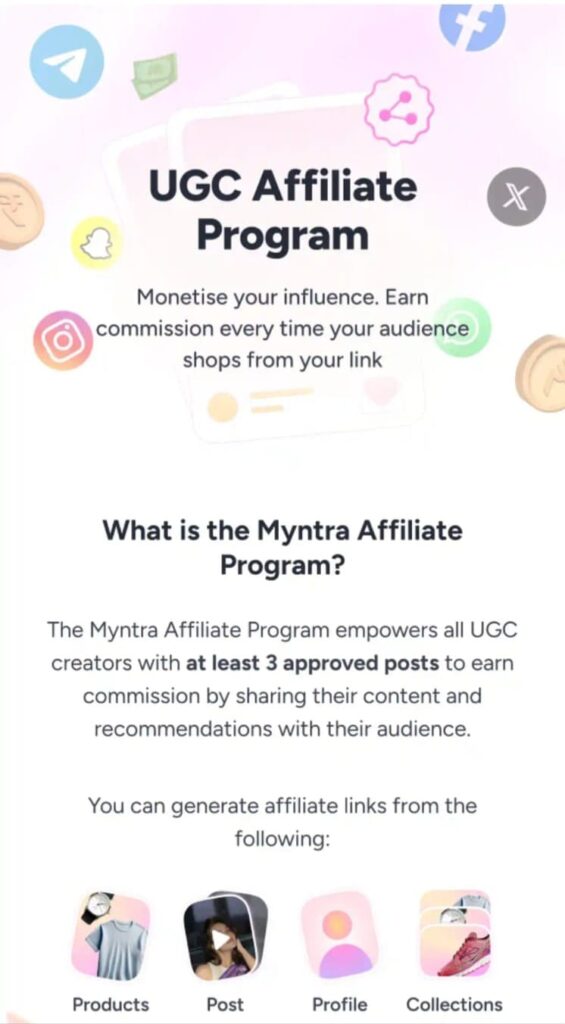
The platform generates unique, trackable affiliate links for individual products, curated collections, and specific UGC posts. Creators can export these links to Instagram Stories, YouTube description boxes, WhatsApp groups, and personal blogs. When someone clicks and completes a purchase, the creator earns a commission on that transaction once it clears Myntra’s return and cancellation window.
The entry bar is intentionally low with no follower count requirement, no brand approval, and no pitching.
What this opens up for nano and micro creators
For a creator with 3,000 Instagram followers who has never landed a paid brand deal, this is the most direct path to monetization currently available on an Indian e-commerce platform. The UGC programme is already mostly Gen Z and 67% from Tier 2 cities, according to Myntra’s own data. These are creators who typically sit outside the follower thresholds brands use to shortlist talent.


The multi-category catalog also matters here. Myntra has expanded well beyond clothing into beauty and home products. A creator who posts skincare routines, room decor content, or lifestyle videos does not need to be a fashion influencer to earn. They can curate collections that match whatever community they have already built.
For the nano and micro tier, affiliate income from a platform like this does not replace brand deals. But for most of them, brand deals were never on the table to begin with. This is income that did not exist for them before.
The commission structure
Myntra’s affiliate commissions are tiered between 8% and 12%, based on where a creator sits within the UGC programme’s internal ranking system. The three tiers are Stylist at 8%, Maestro at 10%, and Trendsetter at 12%. Ranking up requires hitting milestones across three variables: number of posts published, total views generated, and completed orders driven.
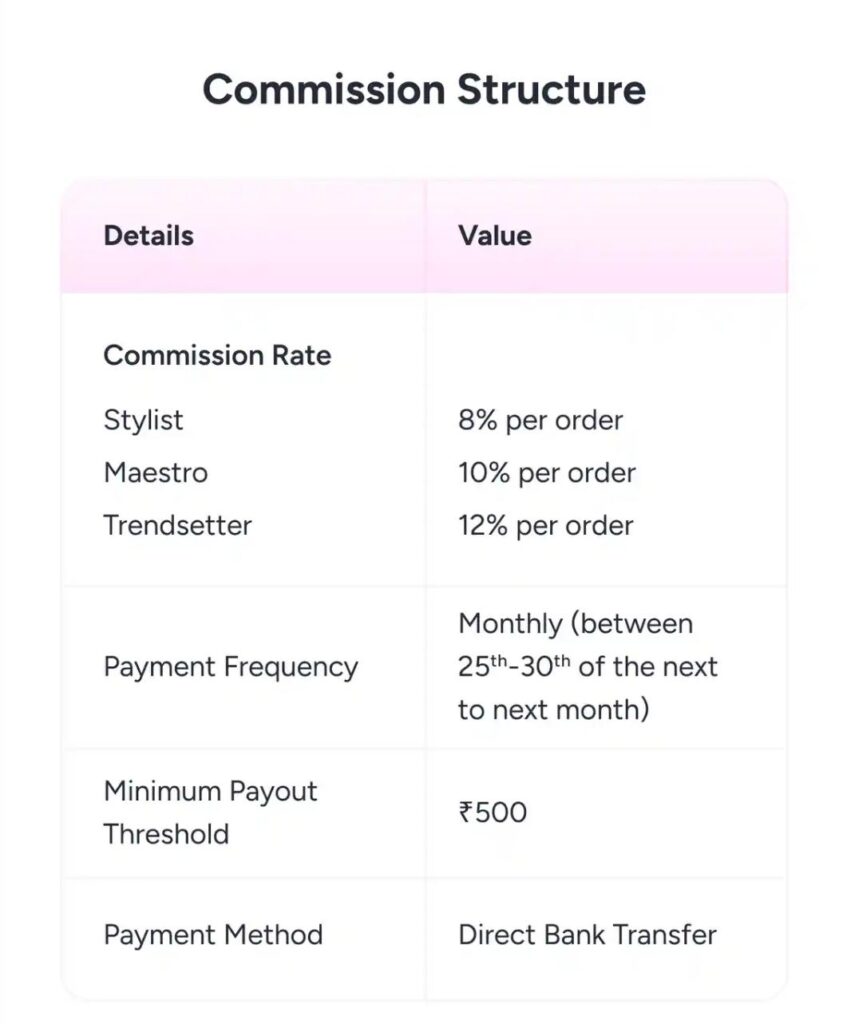
A flat 10% commission for everyone gives creators no reason to keep posting. A tiered system with visible milestones keeps them active, which keeps their content feeding the Myntra platform.
Why this matters beyond just the commissions
Brand deals are the primary income source for most Indian creators who earn at all. But they are also unpredictable. A creator can go months between deals, and the brands that pay reliably tend to work with a small pool of established names. For the vast middle of India’s creator base, that market is effectively closed.
Affiliate commerce from a platform like Myntra does not fix that problem entirely. But it creates a parallel income channel that is not gated by follower count, brand relationships, or approval cycles. A creator with 5,000 followers and a genuine community can earn from their content the moment they post three times on the platform.
The BCG-FICCI report estimated that India’s creator economy influences between ₹33 lakh crore and ₹38 lakh crore in annual consumer spending. The brands that have historically captured that influence through paid deals are now competing with platforms that want to cut out the middleman and pay creators directly for conversions. That changes the income calculation for creators significantly.
Will every major ecommerce platform build this and will brand deals survive
Most already are. Amazon Associates has run a creator-facing affiliate programme for years. Flipkart, Nykaa, and Meesho each operate versions of creator or affiliate commerce infrastructure. What Myntra is doing differently is building it natively inside its own app rather than routing it through a third-party network, which keeps the content, the storefront, and the checkout in one place.
That architecture, content creation inside the platform tied directly to commerce, is closer to what TikTok Shop has built in other markets. If it works at scale, expect Ajio, and Nykaa to build comparable in-app creator commerce features.
The brand deal question is more interesting. Affiliate programmes and brand deals are not the same transaction. A brand deal pays a flat fee upfront regardless of how many people buy. An affiliate commission pays only when someone actually buys. For a creator with 500,000 followers, the guaranteed flat fee of a brand deal is worth more. For a creator with 5,000 followers, the flat fee is ₹0 because no brand is calling. Affiliate income fills that gap.
The real pressure on brand deals comes not from creators preferring affiliate income, but from brands realising they can get performance-based results by working through platform affiliate systems rather than paying creators upfront for uncertain outcomes. That shift is slower, but it is happening. The creators most at risk are mid-tier influencers whose fees are high enough to seem expensive but whose audiences are not large enough to guarantee results. For them, the next few years get harder regardless of how this plays out.